Showing posts with label stuff that interests english majors. Show all posts

Friday, April 29, 2011

Life After College: Laura

 Photobucket
laura

All right. So earlier in the week I was freaking out about my Quarter Life Crisis. Graduation is a huge transition, and I bet I'm not the only one who's a little bit nervous about it. Knowing that many of my readers are of late high school or college age, or just starting out life as 20-something on the go, I decided to start a bit of a mini-series about recent grads and how they made it: the good, the bad and the ugly.

This week I spoke with my buddy Laura. Laura writes at Ruby Bastille and Average Fantastic and is becoming a fantastic wedding planning for her own wedding (everyone go "awww!"). Here, she discusses graduating with a creative writing degree, your need to network and her love of Blizzards.


****


-Where did you go to college? 
I went to Linfield College, a small school in a small town in Oregon.  Go Wildcats!  (My sister is on their tennis team now, so I can say that without sounding like a tool.)

-What was your major?
Creative writing. People give me funny looks because it’s not the most practical-sounding degree, but hey, I know how to use an apostrophe.

-When did you graduate?
I graduated in May 2009.

-What was second semester senior year like, work-wise and emotionally (in relation to school, moving, etc.) 


Oh gosh, that seems like ages ago.  That’s one side effect of graduating: time seems to slow down. It feels like college was five or six years ago, not two. 

Final semester of anyone’s senior year is likely to be totally insane on both counts.  Luckily my workload wasn’t too bad – in fact, I had so many credits taken care of that I got to study Japanese that year, and even when a schedule mishap left me short one credit, I was able to take community service and work at a pet shelter.  Even my thesis class (for which I essentially wrote the first third of a book) wasn’t too stressful because our professor didn’t expect us to produce a completely finished novel in less than a year.

Emotionally, that final semester was definitely challenging.  It’s very hard to come to terms with dissolving the ties you’ve made and the life you’ve established during those four years of college.  I remember one moment in early May, between classes, when I was talking to a freshman girl who I’d only recently become friends with.  On my way to my next class, I realized that I was never going to get a chance to know her well because I’d probably never really see her again, and I deeply regretted not spending more time with her when I had the chance.  That was not a fun afternoon, realizing that soon my friends would be scattered across the globe and that things would certainly change between us.  Fortunately I still live within driving distance of my two best friends, and I don’t know where I’d be if I didn’t have that little lifeline.

-When did you start looking for a job and somewhere to live? What was that like? How long did all that take for you?
Even though the economy was in the toilet when we graduated, I decided to do an internship abroad.  My career goals always included working in a college setting, preferably with study-abroad programs, so I went to Ireland to work in a university’s international education office.  I was convinced that once I came back with ten weeks of real-world unpaid work experience, I’d have no trouble getting into the field.  Surprise!  I’m still not in it, but that’s a story for another day.
Kevin, my boyfriend of three-ish years at that point, proposed to me when he came to meet me in Europe after my internship.  That was in September 2009.  At that point we hadn’t really decided where to plant ourselves, but once I decided to apply to grad school at OSU, it made sense for us to move back to Oregon.  We ended up in Salem, where the housing was cheaper and the economy a modicum better than it was in Corvallis, and we officially moved into our apartment in November. 
At that point, sheer dumb luck kicked in.  My dad was working at an Oregon bank, so he offered to send both of our resumes around the bank to help us find work.  By December, after five or six weeks of applying for jobs, I’d scraped up a part-time job at Blockbuster (unrelated to the networking), but that was a lousy job with only 8 hours a week.  Luckily, the networking kicked in and I interviewed for a temp job at a state environmental agency.  I think I interviewed twice for that job, and was rejected twice, before somebody at their office got mono or something, which required them to hire another temp – me.I kept getting lucky.  Oregon’s economy still hasn’t improved much, but the agency kept me on for another 6 months, essentially doubling my time there.  And when those six months came to an end, one of my coworkers told me her daughter was leaving her job as a receptionist at a real estate agency.  I interviewed and started working there last August. 
 
So, if I get to drop some advice in here, it’s this: start networking right now.  Work on campus or volunteer in the area.  Chat up your professors, because you may come asking about jobs they’ve heard about.  Do job shadows or informational interviews, and stay in touch with those people.  Burn no bridges, because while the economy may be improving slightly, networking plays a huge role in how you get a job.  Some ridiculous percentage of jobs is never posted publicly – eighty percent or something – so who you know and how well you know them is critical. /soapbox

-What was going through your head on graduation day?
 Lots of things, none of them very profound: where my family was in the stands, if my cell phone stuffed in my bra was visible through my robes, if my robes were on right, if you could see my sorority letters on my second sash, if I would trip on my way up to the stage, who would be sitting around me, etc.  It wasn’t until afterwards that I really started to think holy &$#%, I’ve graduated.  It was exciting and a little scary – like standing on the edge of a diving board.  Sure, there might be sharks in the water, but you gotta jump, right?

-What would you tell people who are graduating with a "useless" major? (English major right here)


Honestly, I was never afraid of graduating with "Creative Writing" on my degree because I had so much other work and leadership experience during college.  It did feel a little funny during college to have to field those awkward "what are you going to do with that major?" questions, but after college, people really weren't too concerned about it.  Those one or two words on your degree don't matter nearly as much as the activities, employment, club leadership, class projects, student body involvement, etc. that fill up your resume.


However, as a fellow major in the seemingly useless field of English, you can tell the nosy people that you're learning communication skills that you can apply to a huge range of jobs, which is true.  Employers everywhere are looking for good writers, and there are an awful lot of bad writers out there.


No matter what you majored in, though, you chose that major because you enjoy it and wanted to learn more about it, which should be all the answer you need!

-Are you doing any work in your field? How do you feel about it either way?
Nope.  I’m still a receptionist.  Actually, I’m technically the office manager now, but it’s still nowhere near what I want to do with my life.  Getting into the international-education field has proved to be a lot harder than I expected, even with all the contacts I made through college and my internship.  Since most jobs require a master’s, I applied to grad school twice and got waitlisted both times.  That’s a hard thing to deal with and I’m still debating applying again, both because rejection sucks and because I’m tired of waiting for my life to really start.  Waiting for grad school forced us both into limbo, in a town we don’t enjoy living in, where the job market is lousy and the weather is lousier.  We want to move on with our lives.
I’m still writing, of course.  I work on The Book and occasionally poems during my lunch break and after work.  I don't expect to have a career in writing (although I certainly wouldn’t mind finding one), and while I would prefer to be able to dedicate more of my day to writing, I’m content with what I have at the moment.  I'm going to keep my eye on the job market and apply for whatever comes up.  Writing is my real passion; international education was (is) the passion that will pay. :)

-What was the best part about getting your own place? What really sucked?
The best part was finally having complete independence.  Yes, I’m still living with someone, but he’s my fiancĂ© and therefore my other half. J It’s a lot easier to negotiate chores with one fiancĂ© than three roommates.  We go to bed when we want, we have friends over, we stop at Fred Meyer when we’re out of milk, we leave our papers lying around, we cook for each other, all that fun stuff.  Oh, and we have a cat, which was illegal at school.  Plus, we didn't have to move back in with our parents, which happened to a lot of folks who graduated around that time.  We're pretty proud that we managed to carve a life out for ourselves, even if it's not the most fun or fulfilling life at times.
The worst part has probably been loneliness.  One of our college friends lives in our apartment complex, and another is less than an hour away, but that doesn’t exactly fill the void left by having three roommates, a sorority, classes, and clubs in which to see people.  Working full-time means we don’t have the time or energy to make new friends, even though we should probably try.              

-How did moving out effect your relationships?
Kevin and I weren’t engaged when we graduated, but we had already planned on getting married.  Moving in together was certainly a big change for both of us, but I’m glad we got to work on strengthening our relationship amidst the drama of a bad economy by living together.  
I think moving out was hard on my mom because while I was starting out on my own, my sister was starting college.  I see my mom during the holidays, and I’ll probably see her a lot between now and July as we work on wedding stuff, but it’s been a big change for both of us.  My sister, on the other hand, is less than an hour away at Linfield, so we can meet for dinner sometimes.


-Have you ever had a Quarter Life Crisis? What was that life?
HA. Ahaha. Yes. Oh lord yes. I think I go through one every six months or so. 
I first heard about a "quarter-life crisis" during my senior year and I thought it was a silly thing that only happened to people who couldn't cope with being away from mommy and daddy for the first time.  Surprise!  It actually kind of sucks to have to fight to prove yourself in the real world, and sometimes your biggest victory is being able to mail your rent check and say "I earned that money on my own."  Which is a huge victory, to be sure, but when you've been gradually lowering your expectations to accodomate the lousy economy, you start feeling pretty bad about yourself.  We've been told all our lives that we have something to offer to the world, but a lot of times it seems like nobody wants or needs you, which is an awful feeling. 
The worst one for me was getting waitlisted from my dream grad school two years in a row - I wasn't outright rejected, but I wasn't good enough, ever, to make it in.  I wasn't worthy.  It really dragged me down for a while, but I started looking elsewhere to apply my skills and convincing myself that I WAS worthy, I was just in the wrong place at the wrong time.  There's always a chance for improvement, always another door opening, all that warm-fuzzy stuff.  I'm feeling better about how my life is going now because I was able to look for new open doors rather than staring at the one that had closed.

-Is there thing about the "real world" that no one told you but you wish you'd known?
No one is looking out for you anymore.  This isn’t something I would have necessarily wanted someone to tell me, but it’s something I’m glad I’ve figured out.  I’ve been very lucky in that most of my employers have been very nice people, but I’ve had to keep in mind that they do not have my best interests in mind and they are not concerned with what’s going on in my life.  They are not my friends, and I am not theirs.  It sounds ruthless, but it’s important to keep that relationship in perspective. 
Also, stuff is expensive!  Food prices are ridiculous, Internet costs an arm and a leg, and the heating bill can be scary in winter.  Fortunately, I'm one of the lucky kids whose parents want to keep them on their family plans for insurance and cell phones.  I'm not looking forward to having to manage those expenses.
 
-How do you have fun on (what I imagine is) a limited budget?
Netflix.  Not even joking.  We dropped our cable last fall and never looked back.  Netflix has proved to be way cheaper and more fun than cable and Blockbuster combined.  We can catch our current shows online, and I appreciate not being able to just turn on the TV for the sake of having noise.
Honestly, we’re not the type of people who go out much, so I’m probably not the best person to ask about having fun on a budget.  Plus, Salem is kinda boring.  We coupon-clip and sometimes go out for Blizzards or ice cream.  We keep an eye on local events – there’s some pretty neat stuff in the summer, like an art fair and the World Beat festival.  I shop way too much - that keeps me happy.  We get Groupon, which sometimes has cool stuff.  A local radio station sells half-price gift certificates, and we've gotten a few inexpensive dinners that way.  Other than that, our idea of fun is to just sit at home and play video games or watch a movie. 
Sigh.  We're already old people.

****

What was graduation like for you? Anything you're dreading about it if you haven't been there yet? Any questions for Laura? Fire away!

Wednesday, November 24, 2010

What Journalism Classes Teach


Last semester, I took my final journalism class. I didn't think about it that way until now. I didn't know, after all, that I would never take a class in journalism-- or even writing-- again in my student career. I suppose once things pass us by we tend to wax poetic about them, but honestly, I do feel that I gained something from being in those classes, something more than what makes news and libel laws. I left them feeling as if every person should take a journalism class, no matter where they see life taking them.

So what does journalism teach?


How to juggle. 

Being competent at doing many things at once is an essential skill in our society. Many jobs will have you working on several projects at once, and if you can't cope, you're in for a hell of a ride. One of my journalism professors made sure to have us working on at least two pieces at any given time. In the real world, tasks aren't always discrete and you don't get to finish one before starting another.


The art of talking to strangers.

I'm a bit timid by nature, so learning how to interview people has been tough for me. Though I've done a whole bunch by now, I still get exceedingly nervous before communicating with other human beings, especially ones I'm not so familiar with. The thing is, shyness is one of those problems that really doesn't seem to resolve itself without practice-- and couldn't we all stand to learn how to pick up a phone without getting butterflies? (I can't be the only one!)

How to know what's important.

The more you listen, the more easily you're able to pick out the essentials. This can be especially hard, I think, for writers, especially ones who aren't used to adhering to things like word count. When you only have 300 words, you have to develop a sense of your story at a very intimate, nit-picky level. What is important? What isn't? These are hard decisions, but they get easier to make as your vision grows clearer. As I've gotten more familiar with journalistic writing, I've found I think quicker on the fly when it comes to teasing out the important details that will lead to an actual story. Which brings me to....

How to fail with grace. 


Learning to be a journalist has been a great exercise in thinking on my feet and accepting my own limitations. It's never exactly pleasant to go into an interview and find your questions are leading nowhere, or get through an entire article and not feel sure you've said anything at all-- but these are the chances we really get to show our stuff. I think anyone can take a lackluster interview or article and turn it into something great, but the first step is admitting that your original approach? Not so great. And when dealing with an editor, you learn to take constructive criticism with grace and to admit when you've messed up. Denial doesn't fix a thing.

How to ask hard questions, especially of yourself.

Writers see their words as their children. If you think that notion is silly, I'm guessing you're not a writer. A lot of us creative-types go into blind panic at the thought of having to be our own most critical editors. The worst moments I've had while writing journalism have been the ones when the article is done-- but 50 words too long, meaning I have to go back and cut, cut, cut. It's painful. But sometimes it gets to that point where you have to ask "do I need this?" when looking at a particularly nice sentence that doesn't add much more than whimsy to your piece. I have to ask those questions as often as I have to ask an interviewee to talk about something deeply personal-- at which point I experience that fear that I've crossed a line. But we don't learn without challenging each other and ourselves.


That everyone has a story.  

I can't tell you how many times I've asked someone to talk to me for an article and they say "I don't know why you want to talk to me, I'm not that interesting." False. False, false, false. Everyone is interesting, and everyone has a story inside them that is beautiful and inspiring and just waiting to be told. We often seem to get caught up in the idea that certain things make a good story and that any deviations are boring or inconsequential. You don't have to win in the end. You don't have to have had your life changed. You don't have to have conquered only the most seemingly insurmountable difficulties. Have faith in your story. The reason the world needs good interviewers is because without good interviewers, there wouldn't be nearly so many good stories. Sometimes it takes someone else to pull those bits of beauty out of us. Maybe we just forgot they were there, maybe we took them for granted, but either way they don't deserve to be hidden. This, I think, is one of the most valuable things anyone can discover.


Have you taken a journalism class? What did you learn? What life skills and values have you learned from other classes?

Monday, October 11, 2010

Don't Semicolon and Drive

Last week, one of my professors asked us to do some peer-editing. We were put into group of three and were asked to exchange papers we had written in the past for other classes.

It started out innocent enough, that paper about mythopoetics. Everything was okay. I was learning about Wallace Stevens and about how he really likes poetry to the point of worshiping it... or something. It was interesting, even. I don't know a lot about Wallace Stevens. I was receiving an education just fine.

Until it came along.

Right there. Right in the middle of a sentence where it didn't belong.

A semicolon.

"He is the angel between human thought and its association with the world; traveling between the poetic imagination and reality."

It looked that big to me, I swear. I stared for a moment. The person who used this semicolon had made a bold move. I circled the semicolon. I drew an arrow pointing to the second part of the sentence and wrote "this is not an independent clause."

And then I crossed that out. What if I was wrong? To cover my ass, I scribbled in "incorrect use." It would be vague enough to work.

I'm not really sure why, but once a person declares an English major, it's like they're under the impression that they've been issued a Semicolon License or something. If you're an English major, you can just put them anywhere you like, because you are smart and you read books. I read a lot of books and I am pretty sure I am never confident about when and when not to use a semicolon. I never got the memo than my status as English major made me a godly user of semicolons.

Oh, wait, because it doesn't.

Kurt Vonnegut once said "Here is a lesson in creative writing. First rule: Do not use semicolons. They are transvestite hermaphrodites representing absolutely nothing. All they do is show you've been to college."

All a semicolon does is show that you are, or were, an English major, and that you feel that you have earned your Semicolon License. But that's a lie. Just don't do it. There is always a safer way.


And in conclusion, I give you The Oatmeal. Go there and learn.

Monday, August 16, 2010

Holly and The Importance of Talking


Saturday night was a slow night at work. When I saw a single woman with a maroon book and a thick package of Post-It notes sit down at my table with a lone menu, I felt as if-- well, not as if the night was about to get worse, but as if the gods of monetary luck were not on my side. I'd seen this woman in the restaurant before, though, and she always seemed nice enough. I suppose when you mostly serve people who could be your grandparents it's refreshing to see a well-heeled, 30-something brunette come in. I went over and she seemed happy to see me. Good enough.

By the time she ordered coffee and chocolate mousse, I decided to make conversation-- after all, she was there alone. I asked her what her book was about. She explained that it was something about how poetry influenced the works of classical composers. Most people don't read that for pleasure.

"Are you a professor?"

She was, and a singer. Formerly at Emerson, currently at Salem State and UMass Boston, teaching musical theater. She asked me about college. I told her I wanted to be a journalist. She listened to me like someone who was truly, genuinely... interested. It was almost jarring. You'll meet a lot of people in life who are sort of obligatorily interested in you because they know what questions to ask, but this was different. We talked for a long time. At one point, we discussed freelancing and how hard it can be to scrape by.

"I don't think that will be you," she said. "There's something about you that tells me you're going to do big things. You have the personality for it. I can tell."

After that point, I was smitten with her. I asked her her name: Holly. We shook hands. I resolved to ask her for her e-mail address before she left-- she was so nice that I couldn't just smile and say "have a nice night" as if she were any other customer. I feared, though, that I wouldn't follow through. As talkative and friendly as I can be, I'm also quite shy when it comes to asking for things. Who was I, after all, to ask her for her e-mail as if we could be friends someday?

I walked up to her table at the end of the night, and before I could even back out of the whole let's-talk-sometime thing, she handed me one of her little pink Post-It notes. It read "Mark D'Agostino, People."

"I believe," she said, "that in any creative field people find success through a series of coincidences that aren't really coincidences."

I agreed.

"I went to college with this guy, Mark D'Agostino, who has been writing for People Magazine for a long time now. I went on a date with him once and really embarrassed myself by forgetting his name. I don't know if he'd ever want to have anything to do with me again, if he'd do me a favor, but if you want I can call him for you and see if he'll talk to you. I don't know if you're interested--"

"I'm very interested."

"Okay, well, I'll give him a call and I'll let you know what happens. Maybe something, maybe nothing. But it's worth a shot, right?"

"Yes, absolutely, thank you so much!"

"I can find you here and let you know?"

"I'm going back to school soon. How about we exchange e-mails and we'll get in touch?"

We did. I got her e-mail and a promise that she would see what she could do about getting me, a 21-year-old waitress that she'd just met, a chance to talk to a senior writer at People Magazine. Sure, it's not the editor of Vanity Fair, but a senior writer a well-known magazine nonetheless-- someone who could, if I played my cards right, do something awesome for me down the line.

I beamed the rest of the night, and even though I hardly made any money, it was the greatest night of work in my entire life.

The point here for all of you, especially you creative types? Talk. To. Everyone. Be friendly. Be kind. Open up about who you are and what it is you dream of. While 95% of the time it will probably result in nothing more than a pleasant encounter, you never know what passing stranger has friends in high places. It's entirely possible nothing will come of this and Mark D'Agostino will be totally unwilling to say a single word to me, but even if that's the case, I've learned something about the importance of networking, even if you don't know who you're networking with.

Talk. To. Everyone.

Monday, July 5, 2010

On Close Reading, as Written by an English Major


Today I read this article in The Atlantic, and I just really wanted to share some thoughts on it. It's a piece by Heather Horn on why we need to stop the practice of "close reading" in middle and high schools-- elementary schools, even, I'm sure. Close reading is what you do when-- and I know we're all familiar with this, especially if any of you Americans were Advanced Placement classes-- you take a tiny tidbit of a piece of writing and pick it word from word, searching for meaning and significance in every punctuation mark and capitalization and simile, until you have something that sounds very deep and insightful and having to do with literary technique. Horn thinks this approach needs to go.

As a lover of literature, as a former little girl who devoured books with relish, who wanted to read hard books, classics, everything I could, as an English major, as a journalist, as a writer of poetry, I want to tell you something that has been in my heart for a long time: it's crap.

I will say right off the bat that I don't believe kids shouldn't learn a lot of tiring, boring stuff when it comes to language. We need our kids diagramming sentences and taking intensive grammar courses again, because it's shameful how many adults are unaware of how our language works (and most of the time it's not that hard if you're actually aware of the rules). But close reading? Please. You can teach rhetoric and all that good stuff without making it absolutely miserable. You can read a book and then revisit themes and important passages and things like that, but you don't have to pick everything apart until all you have left are words. Dead words. There are worlds in books, in poetry and you can't really explore or enjoy them while trying to make up a reason why that rock is symbolic of unrequited love. I think close reading often doesn't go along with real critical thinking, which is a hugely important skill that we need and can be applied across the board. I think most of the time, close reading teaches great B.S.ing skills. I don't know what the answer is to the critical thinking problem, but it's not being addressed through any method that students, by and large, don't seem to find rewarding.

Anyway.

Though I've always loved reading, I don't do it much now. I am willing to admit that I rarely read for pleasure, something that started sometime in high school when there just stopped being time. All year I read and dissected books I hated. The summers before junior and senior year, I read 12 books in four months, most of which I hated because I was forced to read them and think they were good, for Advanced Placement courses. I couldn't even tell you what most of them were. A lot of them I skipped reading. In college, I'm drowned in so many texts that I certainly don't get through every one, and I end the semester feeling utterly drained and sick of reading (I don't feel as drained by classes when reading literature I like or when the professor takes a looser, more exploratory approach). I remember there were books I'd wanted to read like when I was little when my mother would take me to the bookstore and I'd pick several with intriguing covers and gobble them down in days. I couldn't. We were expected to know these books so we could sound knowledgeable on tests. Books are more than literary techniques, though: they can breathe like you and I. Books are the same now as they were then, waiting to immerse us and teach us, if we let them.

That's essentially where teachers, in my experience, get it wrong: we need to let children read for pleasure, at least some of the time. English classes should take kids to the library and let them choose some of their own books. They should ask what did you get out of this book? and then find a way-- there is one-- to turn that back around on how literature works effectively. You identified with the dog because it was personified. You thought everything happened at sunrise was important because it was a metaphor. And you had fun, right? And believe it or not, if kids can finally pick up a books and have fun without being pressured to get so much deep philosophy out of it, they'll be good readers. They'll be good readers because they might just want to read a lot. Maybe even for the rest of their lives, if teachers don't ruin it for them.

And I have to mention at this point the tragedy that is poetry taught in school. Poetry is a great way to teach how language works, since it's an example of using language in creative ways while making sense and bending rules, which poets can do because they know the rules so well. I don't know many young people who like poetry. Poetry is always the part of English class kids hate, because the whole thing is sitting there talking about what the word "was" meant in that sentence and why it was so well-chosen.

Teachers say that poets choose every single word so carefully that they have meaning, that you can examine them all and find something.

As someone who writes poetry, I call bullshit. No offense to any of you who may write poetry like this, but I find that this is just the way teachers want us to think poetry works, an art which to me is such a pure mode of expression that everything doesn't have to fit perfectly as long as it makes you feel something. By over-analyzing poetry, we kill it. We take the life from it, the life it needs to really make a person feel something.

When I was in a poetry-writing class in college, I said in front of the class that I don't think you have to analyze poetry, or edit it, or believe it has a meaning, or pretend it does. Sometimes a poet is just describing a really pretty flower-- enjoy it for that. I don't think poems should be edited because a certain word contains a really helpful mythological reference if you put that in there. No. If you can pull the reference out of your own store of knowledge, do it, but don't search for stuff for the hell of it. When you write poetry like teachers teach poetry, you miss the point.

The class looked at me like I was crazy, professor included.

Seeing kids hating books makes me sad. The only value I have for the oh-so popular literary fluffballs we call Twilight and Harry Potter is that they remind kids that books can be fun. Guess what-- no matter how easy these books are, they show that kids WILL DEVOUR LITERATURE if we let them enjoy it and become immersed in it. Kids aren't stupid: they're bored. I'm bored. I'm a college English major and I'm sick of being told what to read and making up crap essays about it. The education system needs to key into this ASAP (though not necessarily colleges across the board: students do elect to take their college classes). I don't say we need to do away with close reading, but we need to reassess how we teach the skill of close reading, preferably in a more engaging way. News flash, kids will love books if we take away the feeling of work. Reading makes you a good reader. Being a good reader makes you a good writer. Being a good writer helps you become an effective communicator. See how more reading freedom could turn into a very, very good thing?

To understand any kind of literature, we don't have to pick it apart or deconstruct it; yes, books are more enriching when we're able to read deeply, but seeing the whole picture is just as crucial.  I think kids would get far more enjoyment and use out of literature if it was just let stand on its own. Read a book, love it, hate it, do whatever you want with it, but love it or hate it because you actually got a little intimate with it-- and that doesn't have to be through exhaustive analysis. I mean, let's put it this way: you're probably feel more intimate with your boyfriend/girlfriend who sees and appreciates you as an entire picture-- a mind and a body-- than your doctor/gynecologist, who views you-- all their niceness aside-- as a patient whose parts are to be examined and assessed.

I suppose that means I'm saying let's make love to books after we take them out for ice cream and their favorite movie, not make them put their feet in stirrups while wearing a humiliating johnny so we can get a better view.


Any thoughts on close reading? Love it? Hate it? Do we need to change how we include it in today's English classes?


Tuesday, May 18, 2010

5 College Books That Need to Be On Your Summer Reading List


Most of the time, the books you have to read for school are pretty unexciting. Fortunately, I've taken some courses in my day that actually provided me with some amazing reads-- like stuff I'd read again. For fun. It's craziness, I tell you!

Wanna know five books that will make you feel highly educated at the beach this summer?


Dracula, by Bram Stoker

Read for: Terror of the Gothic


Enough with this Twilight bull-crap, okay? Dracula is an amazing novel. It has creepiness, mystery, suspense, homoeroticism (all kinds of eroticism), and it's just... gah. Don't read Twilight. Read this. Please. Dracula doesn't sparkle and is really badass, okay? Please, my soul is crushed by the wimpy teen vampire craze sweeping the nation-- nay, the world.


The White Boy Shuffle, by Paul Beatty

Read for: African-American Novels of Satire

This book got some press a few years ago, and was relatively new when I read it for class. Gunnar Kaufman is "an awkward, black surfer bum" who faces racism with humor and wit. He becomes a star basketball player, and then a star poet who resents the bourgeois fans who see him as a messiah of the ghetto.

One of his poems reads:


the full may moon
Christopher Walken's forehead
finally has competition.

If that doesn't convince you....


Fanny Hill, OR Memoirs of a Woman of Pleasure, by John Cleland

Read for: Topics in 18th Century British Literature: Gender

If you love something steamy for the beach, try this novel on for size. This short, fast-paced porno is worth a read purely for its amazingly hilarious, graphic descriptions of the male anatomy, but also if you'd like a look into how 18th Century Brits talked dirty and got it on. It's way more graphic than I expected. This is a great way to read a por-- I mean romantic novel while still being able to argue you're high-browed and totally not a perv. Just say something about how its an interesting depiction of gender roles way back when (it is).


As I Lay Dying, by William Faulkner

Read for: William Faulkner Seminar

This is another short but great read. If you're intimidated by Faulkner's long, confusing sentences, this is the book for you, since there's little of that here. The text is written in chapters from the perspectives of each character, so the form is still a bit experimental, but it's definitely accessible. The Bundren family journeys to bury their dead matriarch, bringing out the best and worst in all of them. It's an interesting study of different personalities. While there's humor sprinkled throughout, the book gets pretty heavy as it goes on, tackling topics like abortion and the nature of sanity. This was probably my favorite read for the course, so I'd recommend it. You could probably get it done in a night, after which you can say why yes I do read Faulkner and laugh haughtily.


The Picture of Dorian Gray, by Oscar Wilde


Read for: Intro to British Literature

If you have not yet read this and you enjoy looking at the follies of humanity, amazing wit, and Oscar Wilde, you haven't lived. This is one of my all-time favorites, in part because Oscar Wilde is an impeccable writer with so very much to say. The novel follows Dorian Gray, a handsome young man who essentially trades his soul for beauty, as he changes from nobleman to monster. Wilde's only novel shows the hideousness of debauchery and vanity through the effects Dorian's actions have on the portrait he so loves-- but grows to hate. Suspense, murder-mystery, and satire abound in this excellent piece.


What's the best book you had to read for class? What are you reading this summer?

Wednesday, April 21, 2010

(((())))


"When was writing ever your profession? It's never been anything but your religion. Never."
--J.D. Salinger (Seymour: An Introduction)


What's your religion?

Monday, February 22, 2010

Jared Paul: "ABC's for Roger"


On Friday, I saw poet and musical artist Jared Paul perform at my university's monthly poetry slam. It's going to sound really corny when I say this, but he's the kind of artist that could change your life. I haven't stopped thinking about hearing him perform and getting the chance to actually sit down and talk with him for a story I'm doing for the school magazine. Paul is charismatic, inspiring, and speaks to the truths that people are still refusing to see.

I really hope you'll all watch this slam piece of his (right down there! look!), "ABC's for Roger" and really think about what he's saying and what we can do to help. People have gotten the world into a lot of trouble, and only with the collected efforts of everyone, no matter how small, can we save it for the future.

You and I? We are part of a generation that must learn to be selfless.


How does this poem make you feel? What are you going to do to help?


Thursday, February 18, 2010

Painless Paper


How college students usually do a paper:

1. You are assigned a paper, say, three weeks in advance. This seems like a ton of time. No need to worry.

2. Forget about the paper.

3. Wait until one week before the paper is due to remember the paper.

4. Start "thinking" about paper. This usually means saying "yup, Civil War" to yourself in the shower.

5. Four days before it's due: start a Word document with the header all set up in MLA format. Look at it with satisfaction.

6. Go on Facebook and continue life as normal.

7. Two days before it's due: sit down and decide to write the paper.

8. Write the first sentence. This is the hardest part.

9. Go on Facebook.

10. Check e-mail.

11. Read blogs.

12. Check Twitter.

13. Go on Facebook.

14. Write another sentence.

15. Repeat steps 9 through 14 until paper is done. Paper will be finished once you've pulled an all-nighter and severely bruised your face from slamming your head against the desk in frustration.

This is how I do a paper, but it really isn't the way I should do it. When I'm actually on my game and being responsible, I do have a few tricks that always seem to help me get through everything with a lot less stress and missed sleep. A lot of you are college students or grad students, so I figured some of this may be of help.

Forget the Computer

Well, obviously not forever. I find that when I can't think of what to write, stepping away from the computer is my best bet for getting the creative juices flowing again-- and don't mean just so I don't look at my Facebook for the 80th time. I usually find that switching to paper and pen for a bit is just the change I need to get my brain working. Next time you feel stumped, take out your notebook and jot down notes or write an outline. Works like a charm.

Do the Math

If you have a 10 page paper due, you may feel super-stressed and a little bit daunted. But let's say you have 3 weeks to complete it in. If you write about a half a page every day in that time, you'll be done with a bit of time to spare. And what's a half a page double-spaced? 125 words? In Internet 2.0-ese, that's translates to making about five tweets about not wanting to do your paper.

Google-- But Stay on Topic

There's a lot of cool information out there on the internet about whatever you're trying to sound very academic about. If you're totally bored with it, why not try reading more about it? You may be surprised to find a lot of interesting facts that totally rejuvenate your interest in your topic-- may even encounter a whole new way to approach your argument. Try not to get too far off track, though.

When You're Tired, SLEEP!

This sounds obvious and sort've asinine, I know. Why wouldn't you sleep when you're tired? If you have to ask, you've probably never been a college student with a deadline fast approaching. A lot of students pull all-nighters and otherwise work way past their mental and physical limits. When you're very tired, you're not going to get much good work done. If you manage your time reasonably, you'll be able to nap and go to bed whenever necessary-- and that's going to help you a lot more than drinking espresso in the library at 3 AM.


What are your tricks for doing papers or projects?


Wednesday, February 17, 2010

The Art of the Interview

Photobucket

As a journalism student, you'd think I'd love interviewing. You'd be wrong. I love listening to interesting people talk, and I love acquiring new information, but if there's one thing in the whole world that makes me all clammy and gives me butterflies, it's talking to strangers. A lot of journalists harbor this anxiety. If you're prepared and know a few rules, you'll feel a whole lot better and be a much better reporter.

Do Your Research

You should try to be as familiar as possible with your subject. Find out as much as you can about them beforehand. This will prevent certain awkward moments from happening (like asking about a woman's amazing modeling career only to find out her agency just dropped her).

Write Out Your Questions


Make a list of talking points before you meet with the person you're interviewing. I really think this is essential, especially if you're nervous. If you get flustered or confused, you'll have a list of questions and prompts ready. Add in one or two throwaways to give you time to write-- this was a tip my news writing professor gave us. Ask a question you don't want the answer to so you can finish writing other things down while your subject talks. Also, try to make your questions directed enough that the person you're interviewing doesn't feel too overwhelmed. "Tell me a little about yourself" is not going to get the same results as "Do you have any hobbies when you're not working?" will.

Appear Confident

Part of the reason you need to prepare beforehand is that you seeming at ease will help the person you're interviewing feel at ease. If you're all jittery and fumbling around with your notebook and apologizing every two minutes, your subject will probably want out-- and soon. Also, it's unprofessional. Even if you're a student, it's important to believe that you're a professional-- especially if you're making calls to important people. People are more likely to be open with someone who seems to know what they're doing.

Your Interview, His Terms

Journalism etiquette lesson: always, always, always work on your interviewee's terms. You're to work around his. You should always offer for him pick where to meet. It may seem uncomfortable to go to a subject's home or his favorite diner, but you can also gather some great information from your surroundings. What does the place this person chose say about him or her? Read between the lines!

Also, even though you're working around what your subject wants, never accept gifts (i.e., if you go to a coffee shop, it's rude to let him buy you a latte). I know it's tempting. I didn't make the rules.

Dress Professionally

This is not the time for your Sonic Youth T-shirt.

Get Real About Rejection

While there will always be people who will say "NO!" to talking with you, I've found that most people are actually pretty willing to be interviewed. I did a person-on-the-street story for the first time last semester, and I was terrified that I'd be berated with harsh words and turned down every time I asked for a word with someone-- plus, my university is in a tough neighborhood, so I was super scared to be wandering the streets alone. That day I got rejected by one or two people who simply said "I'm on my way somewhere" or "I'm in a rush!" I was really afraid for nothing. People are way friendlier than you give them credit for. Plus, people love talking about themselves.

And when you do get rejected, don't take it personally and don't let it ruin your mood. Besides, you should always have a plan B when you're doing interviews, anyway, just in case.

Pretend You're With a Best Friend

The best quotes you can get usually come from just having a conversation with someone, not grilling them with pre-planned questions. Yes, you need those questions to keep you on track, to hit the major points, and to ease your worry, but if you can have a genuine conversation, you're probably going to hit the jackpot. Relax and really tune into what your interviewee is saying-- what really interests you? Even if it seems a bit irrelevant, take note of what you think is cool and steer the interview in that direction.

Always Be Honest

Especially when you're interviewing someone who's not media-savvy (media-savvy= famous person, not= the lady who runs the local grocery store), you need to be completely honest about how you're doing what you're doing and what it's for. If you're using a tape recorder, say so. If you're recording a phone call, say so. And don't say you're using an interview for your class project when you really want to use it in your blog-- even though technically, once you have the information, you can do with it as you please, be nice. Not everyone wants stuff about them on the internet or in a magazine, so ask permission first.


Have you ever interviewed someone? How did it go? What guidelines do you follow for getting a good interview?

Tuesday, February 16, 2010

The Gold Ring

Photobucket

“The thing with kids is, if they want to grab for the gold ring, you have to let them do it, and not say anything. If they fall off, they fall off, but it's bad if you say anything to them.”
--J.D. Salinger, Catcher in the Rye


Monday, November 2, 2009

In Order to Survive Monday

Photobucket


Savor everything you can. You never know when it'll be over.

Thursday, September 3, 2009

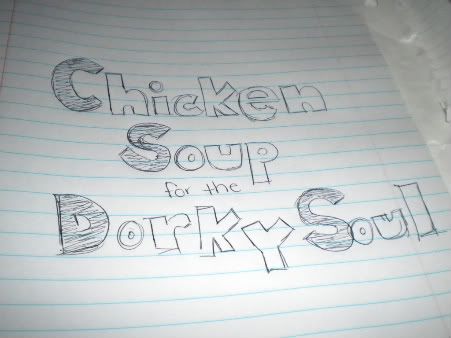
Dorky Things to Do With Your Boyfriend or Girlfriend


Google Analytics is awesome. If you have a blog, you should definitely be using this or something like it, as I know I've been finding it super helpful for tracking my most popular posts, traffic info, etc. It's also really overwhelming: the other day I almost peed myself with shock and joy when I realized someone from Estonia was reading my blog. TMI?

Moving on.

If you're familiar with Google Analytics, you probably realize that you can look at what key words people have used to come across your site. You also probably know this if you read Daddy Likey. I haven't gotten any really wacky searches, but I have gotten a couple that gave me posting ideas. One of them? "Dorky thing to do with your boyfriend." Well, gee, I don't have an official post on that already, but who am I-- an expert on injecting one's relationship with geeky bonding moments-- to deny that person an internet resource?

So without further ado, here are a few ideas for those of you wanting to get a little nerdy with your matching Tetris piece.

1. Read a Book Outloud Together
I have to put this one first and foremost because-- true story-- this is what brought my boyfriend and I together once and for all. Luke, the cute boy I had a crush on, had to read August Wilson's "Fences" for a literature class, and I obliged to help him get through it one night when he was alone doing office hours (this will sound even more scandalous when I mention his office hours were for a club that provides free condoms). We decided to read the book out loud, with one of the rules, of course, being that every character had to be given a funny voice. We spoke in awful Southern accents and when the stage directions said "[puts his arm around her]," my heart fluttered all over the place when he did. We didn't finish it all in that one night, so I invited Luke over the next evening to read while my roommate was away for the weekend. Long story short, that pretty awful play lead to us talking until 4 o'clock in the morning, when he asked me to be his girlfriend. I'm just saying that from personal experience that this can be a funny and productive bonding experience if you pick the right book.

2. Spend the Day at a Museum
Personally, when I think dorky day at the museum, I think the more specific the museum, the better; you know like the Museum of Turquoise 19th Century Boats or something. If you can't find one that's oddly, randomly specific, that's okay. Find any ol' science, history, art, sports, you name it museum in your area and try to visit exhibits that are about something foreign to the both of you. Giddily share new facts with each other and resist running through the dinosaur exhibit, 'cause remember, those museum cops can be pretty tough! My personal favorite is the Boston Museum of Science. TIP: If you go to a science museum, remember to share some space ice cream!

3. Play Video Games in Your PJs
There are few things I'd rather do on a Friday night than sit around with my boyfriend in our PJs and embark on a dangerous co-op mission in Gears of War. I'm thoroughly terrible at it, but it's so much fun to strategize, scream in fear, and ultimately send the bad guys right on down to the proverbial H-E-Double Hockey Sticks. Of course, if you're not into gore or shooters, I'd also recommend Soul Calibur or Mario Kart as well. Really, play whatever you're into-- catch Pokemon side by side if the mood strikes! If you're video game geeks who've run out of two-player games to play, go to Gamestop and ravage the clearance section. You'll find a lot of hilariously bad/super fun games, sometimes for less than a dollar or two. OR: lay the smack down at an arcade-- just make sure you win!

4. Watch Videos of Cute Animals
Youtube is full of them! Provide your own LolCat-like commentary.

5. Tea Party Date
Dress in your finest attire. Serve scones and Earl Grey on fancy China and have a civil debate about politics and your favorite literature. You don't have to get your stuffed animals into it, but I won't stop you.

6. Play Chess in Public
You two will look ridiculously intellectual. Bonus point if you do it somewhere unexpected (ex. the food court at your local mall). Don't know how? Check it.

What are your favorite dorky things to do with your boyfriend or girlfriend?

Friday, March 13, 2009

This is How I Hope You Feel All Weekend

Happy weekend, lovelies! I'm off for some fun and dancing with the girls in celebration of our dearest Amanda's birthday. The rest of the weekend shall be low-key, spent playing videogames, snuggling with my boyfriend, munching on the occasional sweet, and reading Shakespeare. What are your plans?

Saturday, February 28, 2009

Belletristic: A Tribute to Professor Winston Napier

I've said this before, but I spent the last two days at a conference at Clark University (my lovely school that you should come to 'cause it's great and you'd get to meet me, duh!) entitled "Evolutionary Momentum in African American Studies: Legacy and Future Directions." This conference was a great experience in that I got to meet a bunch of successful Clark alumni (including a guy who-- I'm not making this up-- is an actual beekeeper for a living) and some crazy-intelligent professors from outside Clark like Allison Blakely (I ate lunch next to him!), Karla FC Holloway, Amritjit Singh, Mark Anthony Neal, and Bert Ashe (he has INSANE dreds and he asked me where I got my M&M brownie). It was also a great experience because part of the reason we had this conference was the death of my former professor, Winston Napier.

Professor Winston Napier passed away when my first year at Clark had just ended. I had taken two classes with him, African-American Literature I and African-American Novels of Satire, and let me tell you something, he was one of the most intimidating intellects I have ever in my life been in the presence of. Not only was he an indisputable expert in the field, he was incredibly quirky. He usually had his PDA at hand and a strange little case hanging from his neck. He wore this odd leather hat and would whip out an oriental fan when he got too hot. I remember his voice so distinctly: a tinge of his Jamaican heritage layered underneath the music of an astounding vocabulary and what I can only describe as what I think a Harlem Renaissance poet sounds like. When I first met him, I knew that someday I would want to write about him. He was like a character from the pages of a book, too fantastical to be real.

I have a few of distinct memories of him, memories that I never thought I would think of as precious to me.

I remember him going over the syllabus in African-American Lit I and uttering the words "I will not allow you to linger and twist slowly in the wind." I jotted it down immediately. It's one of the most beautiful things I've ever heard.

I remember when I talked to him after class about Invisible Man and if he saw part of the ending as a reference to Heart of Darkness. After our brief conversation about my insight, he said "I hope you'll speak up in class more often. You have good ideas." I was still chronically, cripplingly shy in his presence, despite his confidence in me.

I remember when my Satire class was set in a giant chemistry lecture hall, complete with periodic tables and graduated seating, but there were only twelve of us, so he decided that we would move, immediately. When we left the building to go over to the English house, he asked "you all know where Leir 1 is?" We did, and the twelve of us set off. Not halfway through our walk, Professor Napier pedaled by on his bicycle, scarf flapping.

I remember when the Satire class arrived to an elaborate spread of cheeses, fruits, crackers, and chocolates. We sat down, bewildered and unwilling to touch the food that was surely not for us. When Professor Napier came in he explained that he had been allotted a budget for his classes, and he had decided to use it on providing us a little feast.

I feared Professor Napier because he had a unique approach to teaching. Many teachers wish to hear their students opinions. Many teachers wish to lecture their students on their opinions. Not many teachers come to class expecting that their students will challenge them. Professor Napier wanted his students to have bold new opinions, and to defend them, too, tooth and nail. He respected us most when we were willing to go out on a limb and not be intimidated by his incessent questioning of why we felt that way, where did we find that in the text, and what do you think. According to Professor Napier, as long as we had the text and a willingness to ask questions, we had all the answers. One of my greatest regrets of my academic career thusfar is that I was afraid to speak up in his classes, afraid that maybe I did not have those answers he had such confidence that I'd have.

Professor Napier was supposed to go on sabbatical this year, but instead a series of truly unfortunate events were set into motion, and they eventually led to his tragic suicide (full story here). When I first heard, I was beyond words at the loss of my most-feared and most-admired professor, and as time has passed, I've become more acutely aware of what a grievous loss it truly is.

I was truly honored to be able to attend the conference held in his honor.


*photos courtesy of pataphysical collage and clark english blog

Monday, February 23, 2009

I Wish Billy Shakes Could Be My Facebook Friend

if only he were throwing a gang sign and sticking his tongue out; now THAT would be default material!

Not only would I be able to access lots of silly pictures from backstage at the Globe Theatre and ask him to be a pirate or throw a sheep at him, I would also be able to read his 25 things.

Well, Mike McPhaden certainly got a friend request from ol' Billy, and decided to share with the world one of the best Facebook notes I've ever seen. It kicks my "25 Things" note's ass.


1 Sometimes I Feele so trapp’d by iambic pentameter... Does that make me a Freake?

2 I haue been Knowne to cry at Bear-baiting.

3 I am not uery ticklish. I am Not. So prithee, do not euen try. Waste. Of. Time.

4 I cannot keep Lice, and know not why.

5 Sometimes I thinke plays are all Talke, Talke Talke, and wish for a cart-chase scene. I tried one in The Merry Wives, but it looked like Shitte, so I cut it. The men playing the horses were so Pissed at me.

6 I once threw vp on a man's head, from a high Windowe. I was so fvcking Sicke that Daye.

7 I hate to wear a Ruff, for I haue such a pleasing Necke.

8 As a player, I am painful-slow to learn my part. Once whilst playing Edward I, I used the prompter so ouermuch that a groundling yell’d ~Stop interrupting, Will! And it was my Dadde. (Kydding!)

9 Sometimes when I am Stvck for a rhyme, I new-mint a Worde because I jvst want to get the Damned script ovt the fvcking doore.

10 I play the Flute yet poorly, but I can make any crumhorn beg for Mercy.

11 When I am happy I call Anne my Kicky-wicky. When I am cross I call her “Olde Fun Killer Hag-Ass.”

12 I keepe my Stashe hidden in our seconde best bedde. Shhh. Don’t tell the Fyve-Oh.

13 The people that loue my Wordes the best are always the most disappointed vpon meeting me. Is thisse List ouer yet?

14 On the topic of dating, my daughter Susanna loues to remind me: ~Jvliet was only thirteen! And I remind her that i) she was Italian, an impulsive race ii), she was actually played by a middle-aged Eunuch named Ned, and iii) she died. That always shvts her right vp.

15 I deteste it when the Low-Comedians improuise the scenes I writ them… becavse they always make them so mvch fvnnier.

16 I haue, on occasion, thovght abovt hiring a Boy to fixe my Latin.

17 When I was sixe, my Goode-Friend Charles brovght to Schoole a wood-cut of his mother, qvite naked. After that we called him Charles Nudie-Mummy, whiche did make him Crye.

18 I take my eggs ouer-medium. If I get them O’er-Easily, I tell my Porter, ~You may thinke this is what I ordered, but it’s snot. I thinke that one is a real Slap-A-Th’Knee.

19 I work ovt my calues thrice weekly, usvally three pyramid sets of Calf-Rises whilst holding a flagon of Meade. I knowe I should stretch afterwards, but it Bores me so I do it not.

20 As a boy in my Bed, I would shriek i’the night that Witches wovld come to eat me. My Mother (bless her) wovld smooth my Hair and whispr ~ Be not afear’d, the Witches onlie eat the Jews.

21 Whitsuntide has become so commercial.

22 Nobody euer forgets where they were the moment they heard that Thomas Kyd died. I was shopping for codpieces in West Cheape. I came ovt of the Change-room and the proprietress was i’tears. I said ~What is it, now?
and she replied ~Kyd is dead. There was a melancholy qviet, and then she said ~And that Piece is a mite too small on ye.

23 Euery time we do the Taming of the Shrew, some pvnter wants his Money backe, because we don’t actually show a shrew getting tamed.

24 I do not vnderstand all the Fvss over Currants. Sure, they are both sweet and Small, but must they bee added to EUERY FVCKING MEAL these days? Yestermonth, found I currants in a Tarte of Spinnedge. I meane come on, People. Seriovsly.

25 When I am feeling Melancholic, I console myselfe with the Knowledge that, aboue all else, I will be remembered for my Musick.


find the original of this here

Thursday, October 18, 2007

50 Things I've Learned Without Learning Chemistry

1. Surround yourself with gay and/or metrosexual people, as they'll never fail to make you feel good about yourself.

2. Watching fashion shows all day is NOT a waste of time and is totally NOT related to a deterioration in vision or carpal tunnel or dehydration from drooling over pretty clothes.

3. It's important to get stressed when you can't remember what you're stressed about.

4. Avoid cafeteria meats.

5. Thinking about how... inactive your life has been lately makes you even more liable to buy a copy of GQ and lock yourself in your dormroom.

6. In college, every room is a bedroom.

7. At Clark, we do not categorize. Not even the Asians.

8. The results of working out are maximized if you listen to the Rocky soundtrack.

9. It's okay to look in the mirror and think "damn, I'm hot," because everything is relative (to Boobah).

10. I am a bad person and probably going to hell because of #9. You're not really supposed to get it. Bad high school experience.

11. It's okay to be bitter, but not entirely necessary. Karma is a bitch.

12. The reason everyone has an incredibly bitchy friend is that they don't want to see the truth in situations for themselves.

13. Sometimes, crying is the absolute best thing for a person.

14. There's no amount of anger that wailing on a punching bag can't (temporarily) alleviate.

15. Ice cream really does make you feel better when you're sad.

16. Dressing up small dogs is just rediculous and will people (meaning me) think you're an airheaded strumpet.

17. Strumpet is a great word.

18. So is weiner. No, really, say it. You'll laugh. Don't even tell me you didn't, because I don't believe you.

19. People who aren't just a little bit immature are no fun.

20. Every school has the same valedictorian in a different body.

21. You should never keep a loaded gun in your pants, because you'll end up shooting a hole through your penis (true story of a person I don't know).

22. No one really knows how to use a semi-colon. There is always hesitation before using a semi-colon.

23. Using a semi-colon makes a person feel smart.

24. Emo poems are humorous.

25. Spelling things like an Englishman is fun.

26. Your significant others' parents are bound to be fonder of you than that significant other.27. Breaking up is hard to do.

28. Bob Dylan is far from a good singer.

29. Don't hurry love.

30. Mama said there'd be days like these. Listen to your mama. She's usually right. Don't you hate that?

31. Your mom jokes, when told properly, ARE FUNNY. I don't care what you say.

32. Red things and white things like to have sex in the washing machine. When you pull out the white things, they're pink because they're blushing. Duh.

33. People are supposed to eat meat. Point blank. Torturing animals is wrong, eating them is delicious.

34. The best way to make me angry at you is to bitch about the military when they're the ones who fight for your right to bitch about them.

35. The idea of my friends someday having children makes me feel unsafe. Perhaps this is a reflection on my choice of friends.

36. Dance like a whore at every opportunity.

37. Lists should not end on random numbers like 37.

38. Hippos are a great way to scare away intruders.

39. Everyone takes pictures of themself, but when you look at someone else's camera and see that they have taken pictures of themself, it is more than acceptable to act like the person is a loser. And then hide your own camera.

40. Hold hands crossing the street.

41. If Hillary Clinton becomes president of the United States, I will move to North Korea. Not really, but I will at least adopt an accent and pretend that I am no longer an American until she's out of office because I refuse to claim her as my leader.

42. Stop in the name of love.

43. Everyone has an awkward phase. Some people have a longer one than others. Like forever.

44. It is basically a law for girls to think their girlfriends' boyfriends are complete assholes. Especially if the first girls are single.

45. Martial arts movies kick ass *rimshot*

46. The macarena, the YMCA, the cotton-eye Joe, and the cha-cha slide are clinically irresistible.

47. Getting a Facebook is a detriment to one's GPA.

48. Don't talk to strangers, unless you're my best friend's children who she will someday encourage to talk to strangers. Poor little rascals never had a chance....

49. The word "kiddo" is not patronizing. I forget who I heard say that, but they're wrong. My arguement doesn't even need support, that's how true of a fact I am stating.

50. Feminists are just... no.

Monday, October 8, 2007

BANG!

Once upon a time, there was a little girl. Literally. She was 4'11", which is way too short to reach her coffeemaker without a stool and two phonebooks. This little girl wanted to be a princess. More precisely, she wanted to be a fabulously fashionable, desperately dorky princess, like with a frog prince of her very own who would do her calculus homework and only shop at Brooks Brothers. Ah, yes, that would be the life. And all day she would sit at her computer and watch fashion shows and eat raw cookie dough without gaining a single pound. After a hard day of vegging, the tiny princess would go read a little bit of War and Peace to get ready for bed. Her nightgowns would be made of the finest silks (you know, like ones that John Galliano himself had touched!) and her bed would actually be made of Cool Whip and joy. In her dreams, every dashing young gentleman would be under a spell to believe her unmatchably ravishing and worthy of every granule of their attentions.

Then, on October 8th, 2007, a very good day indeed, the little girl decided that she needed to take control of her dreams. A dream is certainly not worth having if all one wishes to do is sit around and wait for it to transpire. See, not only did she want to be a princess, but more than anything she wished to be a fashion columnist and poet. Yes, that would be much better than going to medical school, even though she did have a macabre fascination with the dead. There is money in being a medical examiner, but there are fabulous perks to writing for Vogue. Being a clever girl, she decided that it was time to start a blog. After all, eighteen years is a long time for the whole wide world to go without experiencing such fabulosity and wit and unaffected charm as hers.

And God said unto bored net junkies everywhere "Let there be blog!" And it was good.

LinkWithin

Related Posts with Thumbnails